Dubrovka Theatre Hostage Crisis
All the Old KnivesThe Nord-Ost siege at Moscow’s Dubrovka Theater was a hostage crisis whose consequences reached well beyond the theater: the Russian operation killed 129 hostages, while the political response helped set the terms for renewed repression in Chechnya and for American intelligence cooperation with the FSB. Recalled by Henry Pelham as a defining experience before his transfer to Vienna, the siege also marks the moment when he surrendered Ilyas Shishani, a source whose disappearance left Henry furious and implicated in the very compromises he opposed.
Causes and the Seizure of the Theater
In late October 2002, more than fifty Chechen Islamic militants took over the Dubrovka Theater during a performance of Nord-Ost, a Russian production of Les Misérables. They held 850 people hostage and demanded that Russian troops withdraw from Chechnya, where war had continued for three years. The theatrical setting became the site of an ultimatum: the captives’ lives were bound to a demand concerning the wider war.
The Assault and Its Human Cost
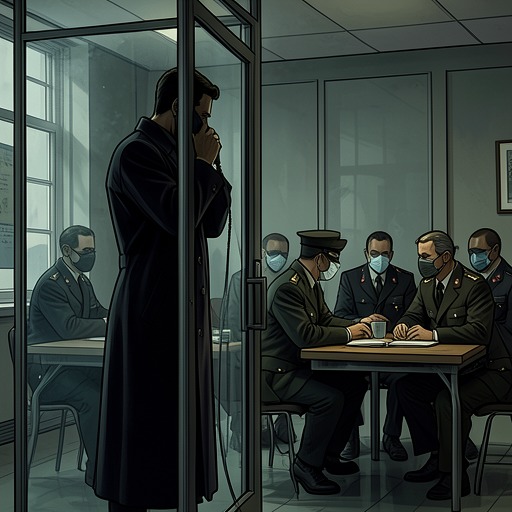
After 57 hours, Russian forces pumped gas into the theater and entered. Nearly all the militants were killed, but so were 129 hostages. Most of the hostages died as a result of the gas and the authorities’ decision not to tell treating doctors precisely what they had inhaled. The failure to disclose that information made the rescue’s aftermath part of the catastrophe: medical care proceeded without a clear account of the substance poisoning the victims. One American was among the dead, a 49-year-old from Oklahoma City who had come to meet his Russian fiancée. In Washington and at the embassy, officials repeatedly invoked his name while condemning the Russian Special Forces operation and its avoidable deaths. The public response, however, did not hold. Vladimir Putin and his spokesmen redirected attention to international terrorism, invoking the attacks that had brought down the Twin Towers the previous year. Putin’s language began to resemble that of the American president, and Washington came to regard Russia’s argument as persuasive enough to relax its criticism.
Political Retreat and Intelligence Cooperation
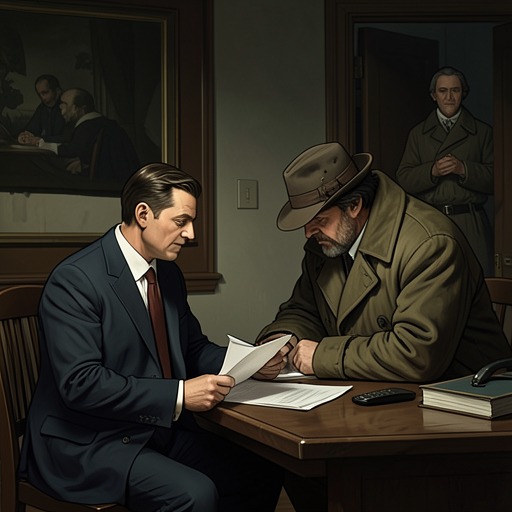
Henry’s station chief, George Lito, warned that a muted response would allow Russia to deepen its intervention in Chechnya. Events quickly bore out the warning: a decision to reduce Russian troop levels was reversed, and large-scale operations in Grozny and elsewhere began a few weeks later. The international condemnation had not prevented the escalation Henry feared. At the same time, the United States assisted the Russian authorities. Under orders, the station helped the FSB identify anti-Putin and pro-Chechen activists in the United States. Henry also met with agents to discuss the station’s dealings with Russian human rights organizations that challenged official accounts of events. On George’s direct orders, he gave up Ilyas Shishani, a Chechen source who had provided privileged access to Moscow’s closed Chechen community during the preceding year. Soon afterward, Ilyas disappeared. Henry’s recollection makes this cooperation concrete through his own action: policy was not only a retreat from public condemnation but also the surrender of a source to the security service whose conduct the crisis had placed under scrutiny.
Investigation and Historical Consequences
In Moscow, politicians, journalists, and former FSB officers investigated the disaster. Their study concluded that the FSB had used at least one agent provocateur, Khanpasha Terkibayev, to direct the militants to the theater. Sergei Yushenkov, a liberal politician, interviewed Terkibayev about his involvement. Yushenkov was later shot dead in Moscow, while Terkibayev died in a car accident in Chechnya. The sequence deepened Henry’s anger at the political and security apparatus surrounding the siege and its aftermath. George treated the outcome as already settled by Putin’s public argument, while Henry refused to let his own objection disappear into silence. He sent an angry cable to Langley to put his frustration on the record, then requested a transfer to a quieter post. His move to Vienna followed, but the recollection does not cast it as a clean escape: the siege remains the background to his later work and to the source he had handed over. Its significance lies both in the mass death inside the theater and in the chain of choices outside it—political accommodation, intelligence cooperation, and the cost borne by people whose access and lives became instruments of policy.